


CranioSacral Therapy: A Gentle Approach to Rest, Relaxation and Reconnecting with Your Body

If you're looking for a gentle way to support your body's natural sense of calm, CranioSacral Therapy (CST) may be worth exploring. It's a light-touch therapy that works with the tissues and fluid surrounding your brain and spinal cord, and it's offered at Connected Chiropractic by Brenda, Doctor of Chiropractic.
The name sounds technical, but the idea behind it is simple:
"Cranio" refers to your head
"Sacral" refers to the base of your spine
Practitioners work along this whole pathway because the head, spine, fascia and nervous system are all connected. Even though the name centres on the head and sacrum, CranioSacral Therapy can be applied anywhere in the body.
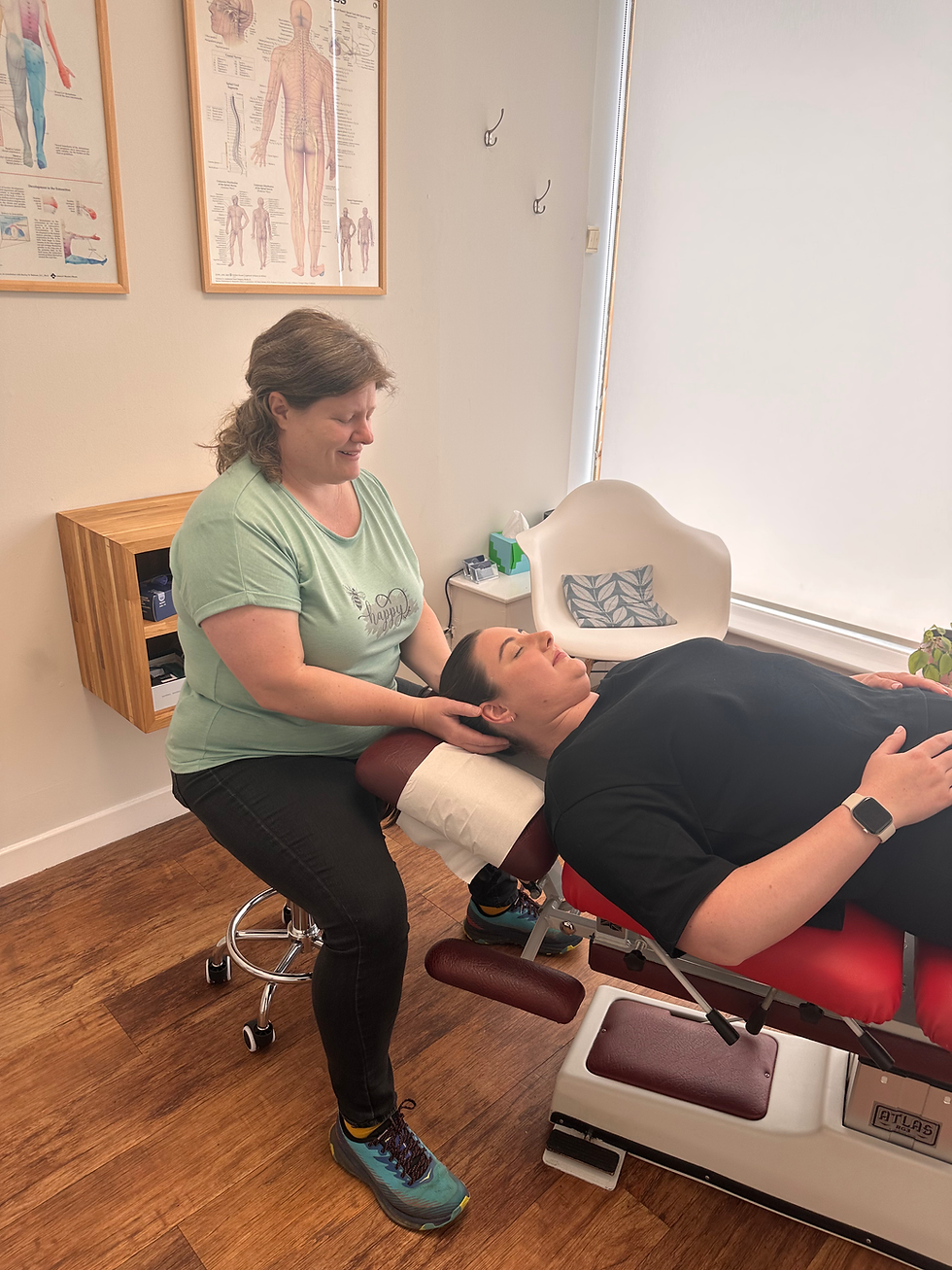
What Happens During a CranioSacral Therapy Session
CranioSacral Therapy uses very light touch, often described as no more than the weight of a coin. You stay fully clothed and lie comfortably on a treatment table while Brenda gently places her hands on areas such as the head, neck, back or sacrum.
She is feeling for subtle areas of tension and holding positions that allow the body to soften in its own time. Sessions are typically slow, quiet and calming, and many people find the experience itself restful, regardless of what else they're hoping to get from it.
What People Often Notice
Everybody responds differently to CranioSacral Therapy, and individual results can vary. That said, there are some experiences people commonly report.
Deep Relaxation
This tends to be the most consistent finding. Many people describe CranioSacral Therapy sessions as encouraging a "rest and digest" state, with a sense of calm, reduced anxiety, better sleep, or simply feeling more grounded afterwards. Even people who are unsure about the therapy beforehand often say they found the session deeply relaxing.
Looser Muscles and Softer Fascia
Because CranioSacral Therapy overlaps with gentle myofascial release techniques, some people notice less tightness through the neck and shoulders, less tension in the jaw, or a greater ease of movement through the spine after a session.
A Gentle Complement to Wellbeing
Some people who live with headaches, migraines, or longer-term discomfort such as fibromyalgia or chronic fatigue choose to try CranioSacral Therapy alongside their existing care, often because they find the calming, hands-on nature of the session soothing. It's worth being clear, though, that current research on CranioSacral Therapy for these conditions is mixed and limited.
A 2024 systematic review and meta-analysis of 15 randomised controlled trials found no statistically significant or clinically meaningful benefit for headache disorders, neck pain, low back pain or fibromyalgia specifically (Ceballos-Laita et al., 2024), and a separate review of headache studies described the certainty of evidence as very low (Carrasco-Uribarren et al., 2023). CranioSacral Therapy isn't a treatment for these conditions, and it shouldn't replace advice or care from your GP or another qualified medical professional. What people do consistently report is that the session itself feels calming and supportive, which is a reasonable and honest reason to try it.
Emotional Release
Because sessions are slow and body-focused, it isn't unusual for people to process emotion during or after a treatment, including moments of tearfulness or simply feeling lighter afterwards. This is a common experience across many gentle, body-based therapies and isn't something to be concerned about.

How CranioSacral Therapy May Work
There are two main ideas behind CranioSacral Therapy:
Fascial Release
Gentle, sustained touch may help ease tension in the fascia, the connective tissue that wraps around muscles, organs and joints throughout the body.
Cranial Rhythmic Impulse
Some practitioners describe feeling a subtle rhythm within the craniosacral system, which they use to guide their hands during treatment. This concept is debated within the wider scientific and medical community, and it's honest to say the underlying mechanism isn't fully understood or agreed upon. It remains part of the theoretical foundation of the therapy, even where the evidence for it is contested.
Is CranioSacral Therapy Safe?
Because the touch used is so light, CranioSacral Therapy is generally considered a low-risk, gentle therapy. Where side effects are reported, they tend to be mild and short-lived, such as temporary tiredness, a brief headache, or an emotional release during or after the session.
As with any therapy, individual experiences can differ, so it's always worth discussing your health history with Brenda, Doctor of Chiropractic, before your first session, particularly if you have an existing medical condition or are currently under the care of another health professional.
Curious to Try CranioSacral Therapy?
If you'd like to experience CranioSacral Therapy for yourself, Brenda, Doctor of Chiropractic, offers sessions at Connected Chiropractic. Get in touch with our team to find out more or to book your first appointment here.
Written by Dr Brenda Ratzeburg,
Doctor of Chiropractic

References
Carrasco-Uribarren, A., Mamud-Meroni, L., Tarcaya, G.E., Jiménez-del-Barrio, S., Cabanillas-Barea, S. and Ceballos-Laita, L. (2023) 'Clinical effectiveness of craniosacral therapy in patients with headache disorders: a systematic review and meta-analysis', Pain Management Nursing, 25, pp. e21-e28. doi: 10.1016/j.pmn.2023.07.009.
Ceballos-Laita, L., Ernst, E., Carrasco-Uribarren, A., Cabanillas-Barea, S., Esteban-Pérez, J. and Jiménez-del-Barrio, S. (2024) 'Is craniosacral therapy effective? A systematic review and meta-analysis', Healthcare, 12(6), 679. doi: 10.3390/healthcare12060679.


